
BIGBEAR
PHARMACEUTICAL

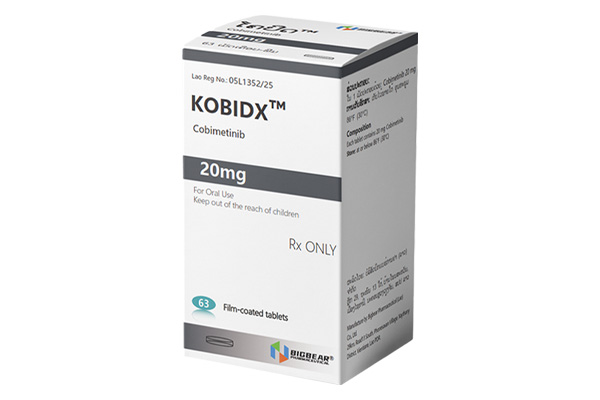
Cobimetinib first received marketing authorization in the European Union in 2015. It is a highly selective, reversible allosteric inhibitor of mitogen-activated protein kinase (MEK) 1/2.

 AuthenticGuaranteeFast DeliveryPrivacy
 The mechanism of action of cobimetinib involves blocking the MEK1/2 signaling node, thereby inhibiting activation of the MAPK pathway and subsequently blocking tumor cell proliferation. In clinical practice, it is frequently used in combination with vemurafenib.
Cobimetinib is indicated in combination with vemurafenib for the treatment of adult patients with unresectable or metastatic melanoma harboring a BRAF V600 mutation.
Treatment Initiation: Before taking cobimetinib, patients must have confirmation of BRAF V600 mutation-positive tumor status using a validated test. Treatment should be initiated and supervised by a physician experienced in the use of anticancer medicinal products.
The recommended dose is 60mg (three 20mg tablets) taken once daily for the first 21 days of a 28-day cycle, followed by a 7-day rest period. The next cycle begins after the rest period. Refer to the vemurafenib prescribing information for its dosing.
If a dose is missed, it can be taken up to 12 hours before the next scheduled dose. If vomiting occurs after taking the dose, do not take an additional dose that day; resume the usual dose the next day.
Dose adjustments are based on the severity of adverse reactions.
For Grade 1 or tolerable Grade 2 adverse reactions: Maintain the dose at 60mg.
For intolerable Grade 2 or Grade 3/4 adverse reactions:
First occurrence: Withhold dose until symptoms resolve to ≤ Grade 1, then resume at 40mg.
Second occurrence: Withhold dose until symptoms resolve to ≤ Grade 1, then resume at 20mg.
Third occurrence: Consider permanent discontinuation.
Specific adverse reactions such as hemorrhage, left ventricular dysfunction, and rhabdomyolysis have dedicated dose modification schedules. When used in combination with vemurafenib for hepatic abnormalities, photosensitivity, or rash, doses of both medicinal products should be adjusted according to the respective severity grades.
For oral use. Swallow tablets whole with water. Can be taken with or without food.
No dose adjustment is required for patients aged ≥ 65 years. However, these patients have a higher risk of experiencing serious adverse reactions and discontinuing treatment due to adverse reactions.
No dose adjustment is required for patients with mild or moderate renal impairment. There are limited data in patients with severe renal impairment; cobimetinib should be used with caution in this population.
No dose adjustment is required. However, unbound cobimetinib concentrations may be increased in patients with severe hepatic impairment. Hepatic laboratory abnormalities should be monitored in all patients with hepatic impairment.
The safety and efficacy of cobimetinib in patients <18 years of age have not been established. Use in this population is not recommended.
Non-Caucasian Population: Safety and efficacy have not been established.
Pregnancy and Lactation: Animal studies have shown reproductive toxicity including teratogenicity and embryolethality. Cobimetinib should not be used during pregnancy unless the clinical benefit outweighs the potential risk. It is unknown whether cobimetinib is excreted in human milk. A decision must be made whether to discontinue breastfeeding or discontinue therapy, taking into account the benefit of therapy for the woman.
Females of Reproductive Potential: Females of reproductive potential must use two effective methods of contraception during treatment and for at least 3 months after the last dose.
Diarrhea, rash, nausea, pyrexia, photosensitivity reaction, alanine aminotransferase increased, aspartate aminotransferase increased, blood creatine phosphokinase increased, vomiting.
Ocular Disorders: Serous retinopathy (including chorioretinopathy, retinal detachment), vision blurred, visual impairment. Very high incidence.
Hemorrhage: Various hemorrhagic events. Serious hemorrhage (e.g., intracranial, gastrointestinal) is rare. Risk is increased when used with antiplatelet or anticoagulant therapies.
Cardiac Disorders: Decreased left ventricular ejection fraction. Median time to onset was 4 months.
Musculoskeletal Disorders: Rhabdomyolysis (rare), blood creatine phosphokinase increased. Median time to onset and resolution for Grade 3/4 elevations were both 16 days.
Hepatic Abnormalities: Elevations in liver enzymes including alanine aminotransferase, aspartate aminotransferase, and alkaline phosphatase.
Skin Disorders: Photosensitivity (47% incidence; Grade 3/4: 4%), cutaneous malignancies such as squamous cell carcinoma (incidence lower than with vemurafenib monotherapy).
Other: Hypertension, anemia, dehydration, hypophosphatemia, pneumonia, severe diarrhea, etc.
The incidences of elevated alkaline phosphatase, alanine aminotransferase, aspartate aminotransferase, and creatine phosphokinase are all >60%. The incidence of Grade 3/4 abnormalities is notably higher compared to vemurafenib monotherapy.
Hypersensitivity to cobimetinib, its hemifumarate form, or to any of the excipients.
Confirmation of BRAF V600 mutation-positive status is mandatory. Efficacy is reduced in patients previously treated with a BRAF inhibitor; alternative therapies should be considered preferentially.
The safety profile of the combination is consistent with known data; however, intracranial efficacy has not been established. Use with caution.
Assess visual symptoms at each visit. Promptly perform ophthalmic examination if visual disturbances occur. If serous retinopathy is diagnosed, withhold dose until symptoms are ≤ Grade 1, then manage according to dose modification schedule.
Assess left ventricular ejection fraction before treatment, 1 month after treatment initiation, and at least every 3 months thereafter. If treatment is resumed after a dose reduction, reassess at 2, 4, 10, and 16 weeks.
Hepatic and Renal Function Monitoring: Monitor liver enzymes before treatment and monthly during treatment. Monitor closely in patients with severe hepatic or renal impairment. Monitor creatine phosphokinase and creatinine monthly to evaluate for rhabdomyolysis.
Initiate antidiarrheal treatment promptly. For Grade 3 or 4 diarrhea not improving with supportive measures, withhold cobimetinib until symptoms resolve to ≤ Grade 1. Reduce dose upon recurrence.
Avoid concomitant use of cobimetinib with strong CYP3A inhibitors (e.g., itraconazole, clarithromycin, grapefruit juice). Close monitoring is required if used with moderate CYP3A inhibitors.
Avoid concomitant use with moderate or strong CYP3A inducers (e.g., carbamazepine, rifampin, St. John's wort).
Cobimetinib is a P-glycoprotein (P-gp) substrate. Concomitant use with P-gp inhibitors may increase cobimetinib plasma concentration.
Contains lactose. Contraindicated in patients with galactose intolerance, Lapp lactase deficiency, or glucose-galactose malabsorption. Contains less than 1 mmol sodium per tablet, i.e., essentially sodium-free.
Driving and Operating Machinery: Adverse reactions such as visual disturbances may occur. Patients experiencing relevant symptoms should avoid driving or operating machinery.
No specific antidote is available. In case of suspected overdose, withhold cobimetinib and institute supportive care.
If any issues arise, please contact us immediately.
Email:laosbigbear@gmail.com

Use the medicine as soon as you remember, and then go back to your regular schedule. Do not use two doses at one time.
Seek emergency medical attention or call the Poison Help line.
Cotellic could make you sunburn more easily. Avoid sunlight or tanning beds. Wear protective clothing and use sunscreen (SPF 30 or higher) when you are outdoors.
Copyright2024@ BIGBEAR All right reserved Bigbear | Bigbear Pharmaceutical | Bigbear Laos


